TALK | O FUTURO DO TRABALHO
Como vamos trabalhar daqui a 100 anos? E daqui a 10? O trabalho humano vivo vai ser substituído por trabalho morto (máquinas)? Faz sentido uma renda básica universal? Pode todo o trabalho ser livre, autónomo e criativo ou trabalhar é um acto penoso para a maioria e sempre será?
EN// How will we work in 100 years? And in 10? Will living human labor be replaced by dead labor (machines)? Does a universal basic income make sense? Can all work be free, autonomous and creative or is working a painful act for the majority and always will be?
BIOGRAFIA
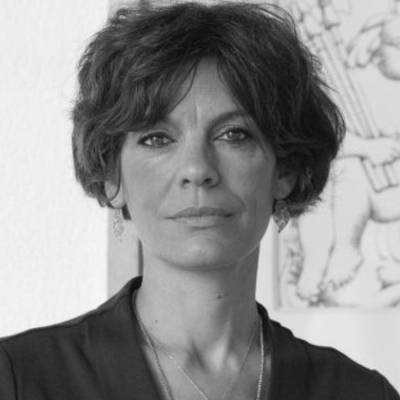
Raquel Varela é professora auxiliar com Agregação na Faculdade de Ciências Sociais e Humanas, Universidade Nova de Lisboa (Secção Autónoma em Educação e Formação Geral). É historiadora e investigadora Integrada do GI História, Território e Comunidades /Polo FCSH. É Presidente do Observatório para as Condições de Vida e Trabalho e coordenadora do Social Data/Nova Sustainability. É investigadora colaboradora do Centro de Estudos Globais da Universidade Aberta.
A sua obra insere-se na área das ciências sociais e humanas, com destaque para os temas da história das revoluções e do movimento operário, história e sociologia global do trabalho, e educação e trabalho, numa perspetiva global.
É autora de História do Povo na Revolução Portuguesa, Breve História da Europa, Breve História de Portugal (escrito com Roberto della Santa), Quem Paga o Estado Social em Portugal? (coord). É autora de ensaios sobre a contemporaneidade, como Do Medo à Esperança, com Coimbra de Matos ou Para Onde Vai Portugal?, editados pela Bertrand. Publicou com Robson Vilalba a novela gráfica Utopia e em 2024 estreou-se no romance biográfico com O Canto do Melro, a vida do padre revolucionário José Martins Júnior.
Raquel Varela tem uma ampla participação como intelectual pública, em cursos, palestras, como guionista e apresentadora de documentários históricos e culturais, curadora de exposições, em programas de televisão e rádio. É co-autora dos documentários António Coimbra de Matos, o Olhar nos Outros, Havana de Padura, co-autora e apresentadora de De Pé Sobre a História. O Mundo global do trabalho (todos para a RTP2).
Em fevereiro de 2021 realizou as suas provas de Provas de Agregação no ramo de História, com especialidade em História Contemporânea, na FCSH/Universidade Nova de Lisboa (aprovadas por unanimidade). Em 2020 recebeu o Prémio da Associação Ibero-Americana de Comunicação/Universidade de Oviedo, Espanha, pelo seu contributo para a história global do trabalho e dos movimentos sociais. Em 2020 foi a primeira distinguida com a bolsa de investigação Simone Veil, Project Europe-Universidade de Munique. Em 2021, foi visiting fellow no Instituto de Estudos Globais Europeus da Universidade de Basileia, Suiça. É honorary fellow do International Institute for Social History (Amsterdam) e, entre 2011 e 2021 foi Group Leader (História Global do Trabalho e dos Conflitos Sociais) na FCSH-UNL.
Em 2013 e 2020 recebeu o Santander Prize for Internationalization of Scientific Production (UNL). Foi professora visitante internacional (2015-2019) no Programa de Pós-Graduação de História da UFF, Rio de Janeiro, Brasil, onde foi responsável por unidades curriculares em História Global do Trabalho. Foi coordenadora (2011-2020) do Projeto Internacional de História Global do Trabalho In The Same Boat? Shipbuilding Industry – a Global Labour History, a partir do ISSH Amsterdão/Países Baixos.
Tem livros e artigos traduzidos em alemão, francês, castelhano, russo, catalão, basco, sueco, inglês, como Historia Popular de la Revolution de los Claveles (Verso Libros), Um Peuple em Revolution (Agone), Peoples History of Europe (Pluto Press), foi editora convidada da revista Cahier d’ Histoire (edição especial da revolução dos cravos).
Publicou como autora dezenas de artigos em revistas com arbitragem científica, na área da história, sociologia, educação, economia, serviço social e ciência política indexados no ISI Thompson, CAPES Qualis A, Scopus, entre outros. Coordenou/na mais de uma dezena de projetos nacionais e internacionais. Orienta vários pós-doutoramentos, doutoramentos, mestrados e bolsas-sandwich.
É membro do editorial board das revistas académicas Workers of the World (IASSC) e deputy editor da revista Critique. Journal of Socialist Theory (Uni. Glasgow, Scopus 4). É fundadora da Rede de Estudos Globais do Trabalho (Nova Delhi/Índia). É membro do Karl Polanyi Centre for Global Social Studies e da European Network in Universal and Global History (ENIUGH). É membro do board da International Association Strikes and Social Conflicts.
Foi responsável científica das comemorações oficiais dos 40 anos do 25 de Abril (2014). Foi curadora da Exposição “Quando mudamos um país ele muda-nos com ele”, 45 anos do 25 de Abril, 2019. Raquel Varela foi durante 9 anos residente do programa semanal de debate público O Último Apaga a Luz, no canal público de televisão RTP 3, participou no programa de rádio Palavra de Honra, e no Efeito Borboleta (Antena1) e escreve regularmente em jornais.
Raquel Varela é uma das mais importantes divulgadoras de ciência no país, e foi responsável, entre 2018-2021, pelo programa de história pública Conversas com História, no Centro Cultural de Belém.
Raquel Varela fez a sua licenciatura Pré-Bolonha (17 valores) em História Moderna e Contemporânea, em 2005, no ISCTE-IUL, uma pós-graduação (17 valores) em História Moderna e Contemporânea na FCSH Universidade Nova de Lisboa e o seu doutoramento (cum laude) em História Política e Institucional no ISCTE, Instituto Universitário de Lisboa, em 2010 (orientação António Costa Pinto, ICS/USCTE e Carlos Taibo, U. Autónoma de Madrid). Fez o seu pós-doutoramento (2010-2016) em culturas de trabalho (IHC-FCSH/UNL), e em História Global do Trabalho em 2013 no IISH Amsterdam. Frequentou a Faculdade de Direito da Universidade de Coimbra (1997-2000).
EN// Raquel Varela is a social historian and researcher in global labour history. She is an assistant professor with habilitation at the Faculty of Social Sciences and Humanities (FCSH) of Universidade Nova de Lisboa (Autonomous Section on Education and General Training). She is a historian and an integrated researcher at the FCSH hub of the IG on History, Territory and Communities. She is the President of the Observatory for Living and Working Conditions and coordinator of Social Data/Nova Sustainability. She is a collaborative researcher with the Centre for Global Studies at Universidade Aberta (Open University).
Her area of research pertains to social sciences and humanities, with an emphasis on the subjects of history of revolutions and the labour movement, history and global sociology of work, and a global perspective on education and work.
She is the author of A People’s History of the Portuguese Revolution (Pluto), Breve História da Europa (A Short People’s History of Europe From World War I to Today). She is the author of essays on subjects such as labour and everyday life, internationalism, education and emancipation, and living conditions under capitalism. With Robson Vilalba, Varela published the graphic novel Utopia. In 2024 she published a biographical novel, O Canto do Melro (The Blackbird’s Song), about the life of revolutionary priest José Martins Júnior.
Raquel Varela is widely engaged as a public intellectual. She gives courses and lectures, has been a scriptwriter and presenter of historical and cultural documentaries as well as a participant in television and radio programmes. She is co-author of the documentaries António Coimbra de Matos, Olhar nos Outros, Padura’s Havana, co-author and presenter of De Pé Sobre a História. O Mundo Global do Trabalho(Standing on History’s Shoulders. The global world of work) (all of these for public television’s culture channel RTP2).
In February 2021, she took her habilitation exams in the field of History, specialising in Contemporary History, at FCSH/Universidade Nova de Lisboa (unanimous approval). In 2020 she won the Ibero-American Communication Association’s prize (of University of Oviedo, Spain) for her contribution to the global history of labour and social movements. In 2020 she was the first recipient of the Simone Veil-Project Europe research grant, University of Munich. In 2021, she was a visiting fellow at the Institute for Global European Studies at the University of Basel, Switzerland. She is an honorary fellow at the International Institute for Social History (Amsterdam). Between 2011 and 2021, she was Group Leader for Global History of Labour and Social Conflicts at FCSH-UNL. In 2021, she created the Social Data – Digital Platform for Social Sciences at FCSH / Nova4Globe, which she coordinates.
She was a visiting professor at the Postgraduate Programme at Universidade Federal Fluminense, Rio de Janeiro, Brazil, where she was responsible for Global Labour History courses. She coordinated the International Global Labour History Project In The Same Boat? Shipbuilding Industry – a Global Labour History, at the ISSH Amsterdam/Netherlands (2011-2020). She is the author and/or coordinator of more than forty books on global labour history, the welfare state, history of Portugal, history of Europe in the XX Century, history of social movements. Several of her books and articles have been translated into German, English and French. She has published more than sixty articles in scientific journals in the areas of history, sociology, education, economics, social service and political science.
Raquel Varela has coordinated 17 national and international projects. She tutors post-doctorates, doctorates and master’s degrees. She is a member of the editorial board of the academic journals Workers of the World (IASSC) and deputy editor of Critique, Journal of Socialist Theory (Uni. Glasgow, Scopus 4). She is the founder of the Global Labour Studies Network (New Delhi/India). She is guest member of the Board of Trustees of the ITH-International Conference of Labor and Social History (Austria). She is a member of the Karl Polanyi Centre for Global Social Studies and the European Network in Universal and Global History (ENIUGH).
She is a board member of the International Association Strikes and Social Conflicts, a network that gathers academics and twenty institutions from Northern and Southern Europe, North and South America, Asia, Africa, and Australia. She was the scientific curator for the official commemorations of the 40th anniversary of 25 April 1974 Revolution (in 2014). She was an international evaluator of CNPQ / Brazil. She curated the exhibition “Quando mudamos um país, ele muda-nos com ele” (‘When we change a country, it changes us along”), 45 years from the 25th of April, in 2019. In 2013 and 2020 she was awarded the Santander Prize for Internationalisation of Scientific Production (UNL). Raquel Varela was a resident commentator on the weekly public talk show O Último Apaga a Luz (“The Last One Out to Shut the Lights”) on public television channel RTP 3, and took part in radio programmes Palavra de Honra and Efeito Borboleta (Antena1). She regularly writes in the main national newspapers, and is one of the most prominent disseminators of science in the country. Between 2018-2021, she was responsible for the public history programme Conversas com História (Conversations with History) at the Belém Cultural Centre, in Lisbon.
Raquel Varela got her pre-Bologna degree (17/20) in Modern and Contemporary History in 2005 at ISCTE-IUL; a postgraduate degree (17/20) in Modern and Contemporary History at FCSH, Universidade Nova de Lisboa; and her PhD (cum laude) in Political and Institutional History at ISCTE, Instituto Universitário de Lisboa, in 2010. She completed postdoctoral studies (2010-2016) in Labour Cultures (IHC-FCSH/UNL) and in Global Labour History at the IISH Amsterdam in 2013. Prior to her degree in History she had read law at Coimbra University (1997-2000).